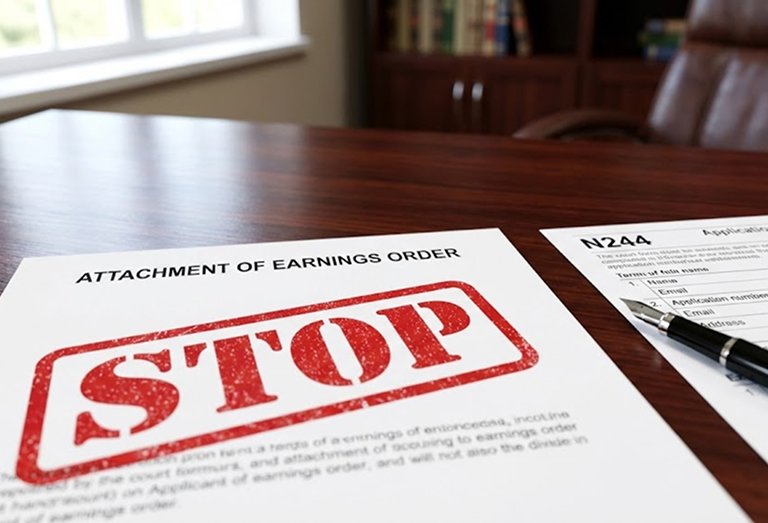
If money is being taken directly from your wages, it can feel overwhelming and stressful. An Attachment of Earnings Order (AEO) is a legal instruction that requires your employer to deduct money from your pay and send it directly to your creditor. While this can feel like you’ve lost control of your finances, the good news is that there are ways to stop, reduce, or manage an Attachment of Earnings Order.
Understanding how an AEO works, and what options are available to you, can help you regain control and reduce financial pressure.
What Is an Attachment of Earnings Order?
An Attachment of Earnings Order is issued by a court when a creditor has already obtained a County Court Judgment (CCJ) against you and has not been able to recover the debt through other means.
Once the order is in place:
- Your employer must deduct a set amount from your wages
- The money is sent directly to the court or creditor
- The deductions continue until the debt is repaid or the order is changed
The amount taken depends on your earnings and personal circumstances. The law ensures that you are left with a minimum amount of income, known as protected earnings, to cover essential living costs.

Can You Stop an Attachment of Earnings Order?
In some situations, yes, an Attachment of Earnings Order can be stopped or changed. The options available depend on your circumstances and the reason the order was made.
1. Applying to Vary the Order
If the deductions are causing financial hardship, you can ask the court to vary the order. This means asking for the payment amount to be reduced.
To do this, you’ll need to provide:
- Details of your income
- A breakdown of your essential living costs
- Evidence showing that the current deductions are not affordable
If the court agrees, it may lower the amount taken from your wages to a more manageable level.
2. Applying to Suspend the Order
In some cases, you can apply to have the Attachment of Earnings Order suspended. This temporarily stops deductions, often while another solution is being considered.
This may be appropriate if:
- Your financial circumstances have changed significantly
- You’re in the process of setting up a formal debt solution
- You can demonstrate that continuing deductions would cause serious hardship
Suspension is not automatic, but it can offer valuable breathing space.
3. Clearing the Debt in Full
If you’re able to pay off the remaining balance in one payment, for example, through savings, help from family, or a lump sum , the Attachment of Earnings Order will end once the debt is cleared.
This option isn’t available to everyone, but for some it can be the quickest way to stop deductions.
4. Using a Formal Debt Solution
Entering a formal debt solution can stop an Attachment of Earnings Order altogether. Options may include:
- An Individual Voluntary Arrangement (IVA) – a structured repayment plan that freezes interest and brings debts together into one affordable monthly payment
- A Debt Relief Order (DRO) – for people with very low income and minimal assets
- Bankruptcy – in more serious cases, where other options aren’t suitable
Once an appropriate solution is approved, most enforcement action, including attachment of earnings, is usually halted.

What If You Change Jobs?
If you move to a new job while an Attachment of Earnings Order is in place, you must inform the court. The order can be transferred to your new employer, and deductions may continue.
Failing to notify the court could lead to further legal action, so it’s important to keep your details up to date.
Will My Employer Know About My Debt?
Your employer will know that there is an Attachment of Earnings Order because they are legally required to process the deductions. However, they won’t be given details about the nature of the debt , only the amount to deduct and where to send it.
Employers are not allowed to dismiss you simply because you have an Attachment of Earnings Order.
What Should You Do If You’re Struggling?
If an Attachment of Earnings Order is causing financial strain, it’s important to act quickly rather than ignoring it. There are ways to reduce the impact and regain control, but they often require taking the first step.
Getting advice early can help you:
- Understand whether the order can be reduced or stopped
- Explore alternative debt solutions
- Avoid further enforcement action
An Attachment of Earnings Order can feel overwhelming, but it doesn’t have to define your financial future. With the right advice and support, it’s often possible to reduce the pressure, regain control of your income, and work towards a more stable situation.
If you’re worried about an Attachment of Earnings Order or struggling with repayments, My Debt Plan can help you understand your options and find a way forward that works for you.