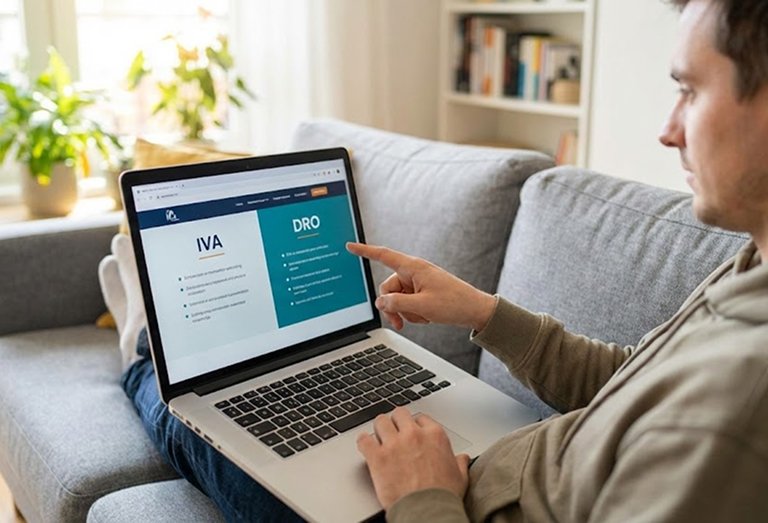
If you’re struggling with unmanageable debt, you may have come across two common options: an Individual Voluntary Arrangement (IVA) and a Debt Relief Order (DRO). Both are formal debt solutions designed to help people regain control of their finances , but they work in very different ways and suit very different situations.
Understanding the key differences between an IVA and a DRO can help you make a more informed decision about which option may be right for you.
What Is an IVA?
An Individual Voluntary Arrangement (IVA) is a formal agreement between you and your creditors to repay part of your debt over a fixed period, usually five or six years.
Your monthly payment is based on what you can realistically afford after covering essential living costs. Once the IVA is in place, interest and charges are frozen, and creditors included in the arrangement can no longer contact you directly.
At the end of the IVA, any remaining unsecured debt included in the agreement is written off.

Key features of an IVA:
- Monthly repayments based on affordability
- Typically lasts five or six years
- Protects you from creditor action
- May allow you to keep assets such as your home
- Suitable for people with a regular income
An IVA can offer structure and certainty, especially for people who want to avoid bankruptcy and can commit to ongoing payments.
What Is a Debt Relief Order (DRO)?
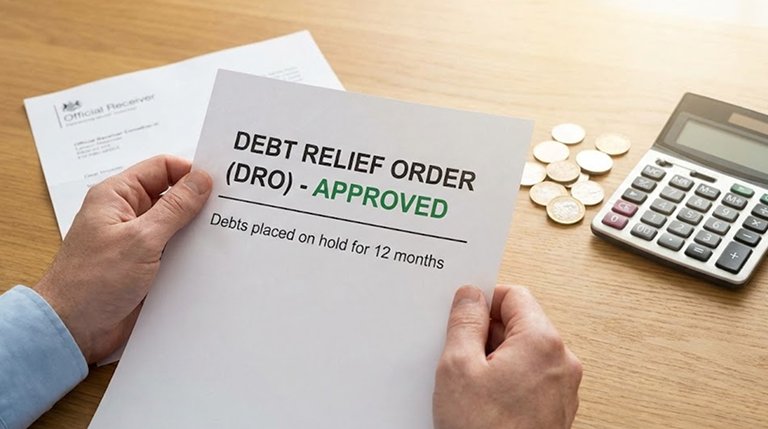
A Debt Relief Order is a formal debt solution designed for people on a low income with minimal assets. It provides relief from qualifying debts for a period of 12 months.
During the DRO, you do not make payments towards your debts. If your financial situation does not improve during that time, the debts included in the DRO are written off at the end of the 12 months.
Key features of a DRO:
- Designed for people with low income and few assets
- No monthly repayments required
- Debts are written off after 12 months
- Much lower cost than other formal solutions
- Strict eligibility criteria
A DRO can be a lifeline for those who have little disposable income and no realistic way of repaying their debts.
Key Differences Between an IVA and a DRO
| Feature | IVA | DRO |
|---|---|---|
| Length | Usually 5–6 years | 12 months |
| Monthly payments | Required | Not required |
| Debt limit | Higher debt levels allowed | Strict debt limit applies |
| Income level | Regular disposable income needed | Very low income only |
| Assets | You may keep assets | Must have minimal assets |
| Cost | Fees taken from payments | No fee |
| Credit file impact | 6 years | 6 years |
Which Option Might Be Right for You?
An IVA may be more suitable if:
- You have a stable income
- You can afford monthly repayments
- You want to protect assets such as a property
- Your debts are higher than the DRO limit
A DRO may be more suitable if:
- You have very little disposable income
- You do not own significant assets
- Your total debts fall within the DRO limit
- You need a low cost solution
Both options offer protection from creditors and a clear path out of debt, but they serve very different financial situations.
How Do They Affect Your Credit Record?
Both an IVA and a DRO are recorded on your credit file for six years from the start date.
During this time, obtaining credit can be difficult, and any credit offered is likely to come with higher interest rates. Once the six years pass, the record is removed, giving you the opportunity to rebuild your credit profile.
Getting the Right Advice
Choosing between an IVA and a DRO is a significant financial decision. Making the wrong choice can cause unnecessary stress or financial difficulty, so it’s important to get clear, personalised advice.
My Debt Plan can help with:
- Understand which solutions you qualify for
- Compare the long-term impact of each option
- Choose a solution that fits your circumstances and future goals
Both an IVA and a DRO can offer a fresh start if you’re struggling with debt, but they’re designed for different financial situations. The right choice depends on your income, assets, and overall financial stability.
If you’re unsure which option is right for you, speaking on of our trusted debt advisers at My Debt Plan can help you move forward with confidence and clarity.